Across several constituencies, newly built digital centres meant to open doors for young people are standing unused, with locked rooms, empty desks, and no sign of activity months and even years after construction was completed.
Members of Parliament on Tuesday were told that a large number of the facilities remain idle despite being physically ready. The issue was raised during a joint session of the National Government Constituencies Development Fund Committee and the Communication, Information and Innovation Committee held at Parliament Buildings.
The session, chaired by Eldama Ravine MP Musa Sirma and Dagoretti South MP John Kiarie, focused on the slow progress in turning the hubs into working centres that can support digital learning and access to online jobs.
Lawmakers were informed that the original plan was to have a hub in every ward, supported through NG-CDF, while the Ministry of ICT was expected to equip and operationalise them once construction was complete. However, that handover appears to have stalled in many areas.
MP Kiarie noted that MPs had already committed funds toward the programme with the expectation that the remaining work would be completed by the responsible ministry.
“We are now in the fourth year since the programme was launched, and we are approaching an election cycle. We had hoped that by now, young people would be accessing online jobs locally and abroad through these hubs,” he said.
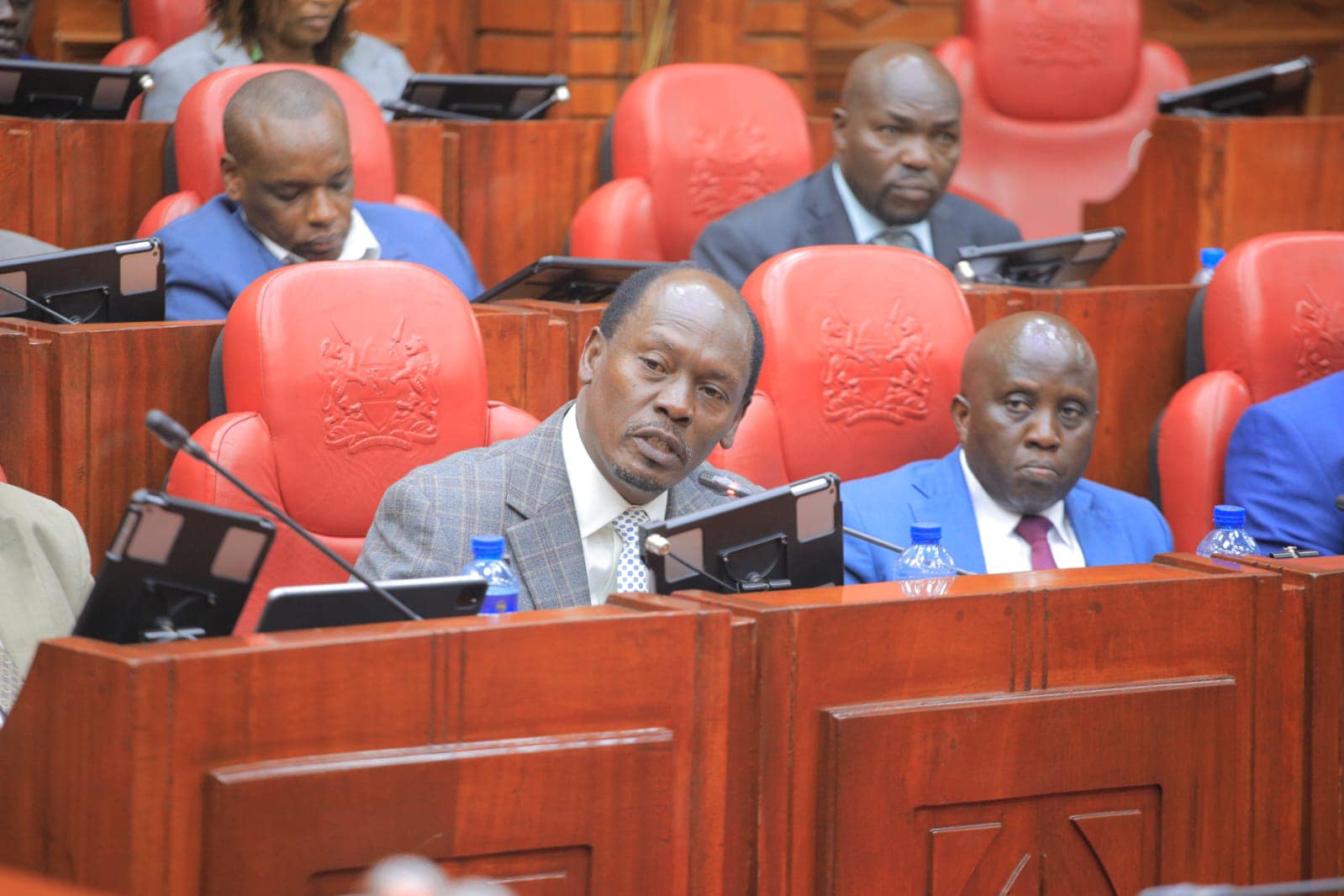
 Dagoretti South MP John Kiarie during a joint session of the National Assembly National Government Constituencies Development Fund Committee and the Communication, Information and Innovation Committees held at Parliament Buildings on April 7, 2026.PHOTO/NATIONAL ASSEMBLY
ICT Cabinet Secretary William Kabogo, who appeared before the committee, acknowledged that many of the centres are not functional and described the situation as unacceptable.
“We have built buildings, but we have not put the pews. The structures are ready, but there are no devices, no furniture, no internet and no staff. It is a national embarrassment.” he said.
A report dated April 3, 2026 shows that out of 391 planned digital hubs, 271 have been fully equipped and are in operation. The remaining 120 are either incomplete or not functional. Out of these, 99 NG-CDF-funded hubs are complete but have no equipment, while two additional hubs in Bungoma and Nairobi bring the number of idle facilities to 101.
While some institutions such as Coast National Polytechnic and Kabete National Polytechnic have functioning hubs fitted with 100 devices each, several others including Githunguri Technical and Vocational College, Karuri Digital Hub and Kinoo Youth Polytechnic remain unused despite completed buildings.
Concerns were raised over unequal distribution and access, with Kitutu Masaba MP Gisairo Clive Ombane pointing out that some constituencies have ready facilities that are never used.
“We have beautiful buildings in my constituency, some even in my door step but the youth have never seen a single computer there.”
Kabogo attributed the delays to a mix of challenges, including late delivery of devices by suppliers, failure by some NG-CDF offices to procure furniture, delays in electricity and internet connections by Kenya Power, and procurement processes linked to World Bank-supported components.
He also cited land disputes in counties such as Kwale, Lamu and Isiolo, which have slowed construction in certain locations.
“We cannot keep blaming the World Bank. Our children are in 2026. They need digital skills now. This is a leadership issue,” said Hon. Mary Maingi (Mwea).
He further explained that some delays were inherited, including slow assembly of devices by institutions such as Jomo Kenyatta University of Agriculture and Technology and Moi University.
“I am not here to give excuses. I am here to provide a roadmap even as things seem impossible to complete before the next year’s general elections,” he said.
Under the new plan presented, each of the 101 idle hubs is expected to receive 25 devices by the end of April 2026, followed by another 25 devices by the end of May. Staff deployment is expected by the end of April, while Kenya Power is to complete electricity connections by June.
However, MPs questioned the timelines, noting that similar commitments had been made before without being fully implemented.
“You told us last year that by December 2025 all hubs would be operational. It is now April 2026. What guarantee do we have that this will not be another promise?” Bomachoge Chache MP Alpha Ondieki.
Kabogo said performance contracts have now been signed with suppliers, with penalties being considered for delays by implementing agencies.
The report further shows that 22 constituencies, including Mandera West, Garissa Township, Thika Town, Embakasi West, Ruaraka and Makadara, have not allocated NG-CDF funds toward the hubs, raising concerns about uneven access to the programme across regions.
“How do you explain to a young person in Mwea that there is no plan for a digital hub, while in Ruiru there are three?” Hon Maingi asked.
At the same time, progress on larger standard hubs remains slow. The Likoni hub valued at Sh164 million is 31 per cent complete, Kilifi at Sh36 million stands at 35 per cent, while projects in Kikuyu and Siaya are expected to be completed in 2027.
As the meeting came to a close, Musa Sirma urged the ministry to accelerate implementation and ensure the facilities begin serving their intended purpose.
“By June 30, 2026, we want to see those 101 hubs operational. Otherwise, we will recommend that no further funds be released until all completed structures are functional,” he said.
Kabogo left the session under pressure to deliver results as attention shifts to whether the long-delayed programme will finally become useful to the thousands of young people it was designed to serve.